ADAS calibration after a new windshield
The camera behind your mirror reads the road through the glass. Change the glass and the camera has to be aimed again, or the driver assist systems guess.
What the windshield camera does
Most cars built in the last several years have a camera mounted high on the windshield, behind the rear view mirror. It watches the lane markings, the car ahead, signs and sometimes pedestrians. Lane departure warning, lane keeping assist, automatic emergency braking, adaptive cruise on some models and automatic high beams all rely on what that camera sees.
That camera is a measuring instrument. It works out where the lane lines are relative to the car and how far away the car in front is, and it does that from angles. If the camera is pointed a fraction of a degree off from where the car thinks it is pointed, every measurement it makes is off by the same error, and the error grows with distance.
Why new glass means a new aim
When a windshield is replaced, the camera comes off its bracket and goes back onto a bracket bonded to the new glass. Even with good installers and the right glass, the bracket position, the glass thickness and the optical quality are not identical to the original. A small change in the camera’s angle looks like nothing at the windshield and like a lane shifted sideways a hundred metres down the 417.
Vehicle makers know this, which is why most of them call for a calibration any time the windshield is replaced. The same applies after a camera is removed or replaced, after some collision repairs, and on many cars after a wheel alignment that changes the thrust angle, the direction the rear wheels are pushing the car.
Static and dynamic calibration
There are two ways to do it, and the vehicle maker decides which one your car needs.
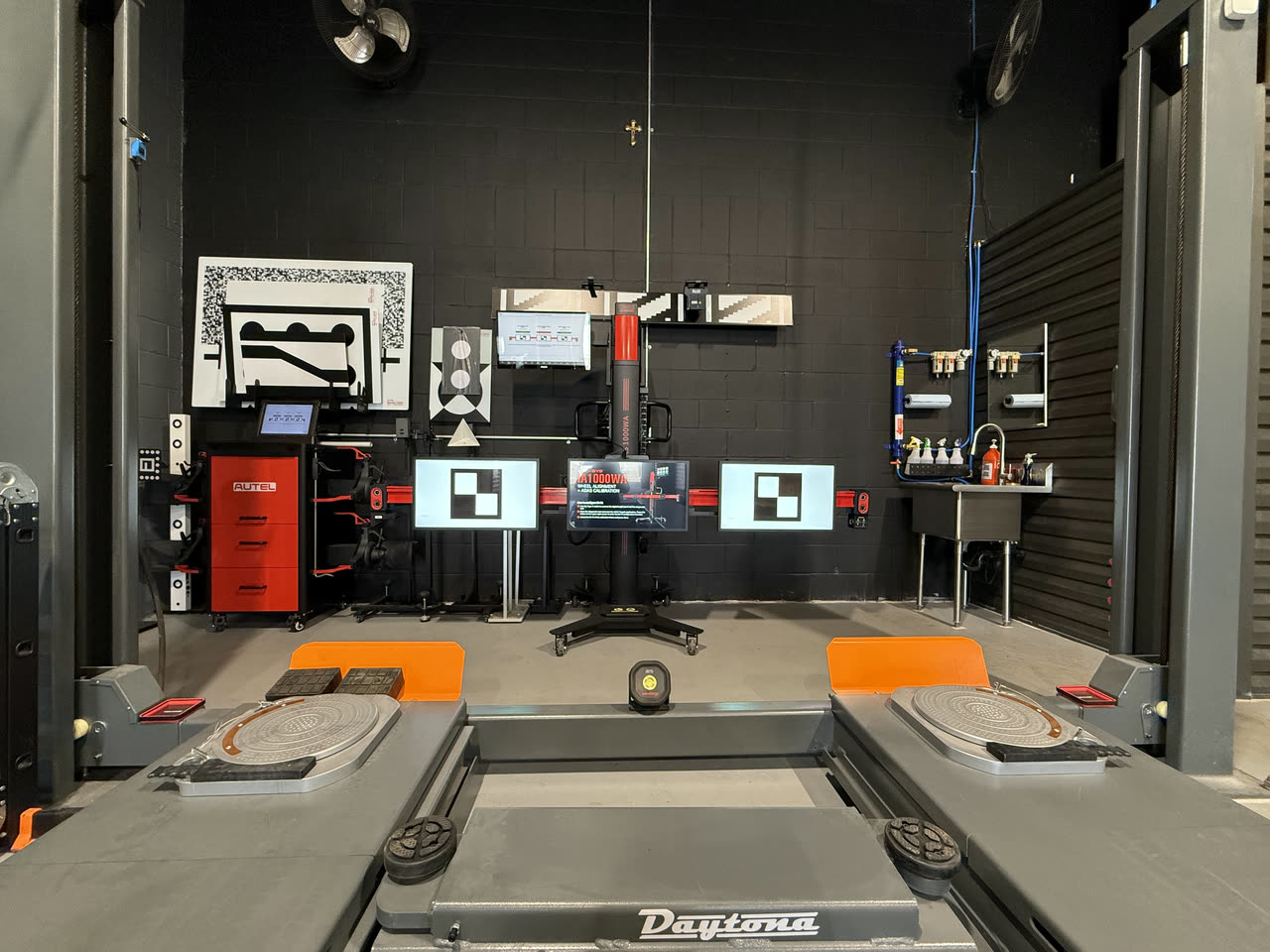
- Static calibration is done in the bay. The car sits on a level surface, the tires are at the right pressure, the fuel tank and load are as specified, and a target board with a printed pattern is placed at an exact distance and height in front of it. A scan tool puts the camera into calibration mode and the camera aims itself using the target.
- Dynamic calibration is done on the road. A scan tool starts the process, then the car is driven at set speeds on roads with clear lane markings until the camera reports that it has learned. Weather, worn paint on the lines and traffic all affect how long that takes.
- Some cars need a static calibration followed by a dynamic one.
Static calibration depends on setup. The floor has to be level, the target has to be square to the car’s thrust line, and the distances have to be right. That is why it belongs in a proper bay and not in a parking lot.
Our setup at Unit 112
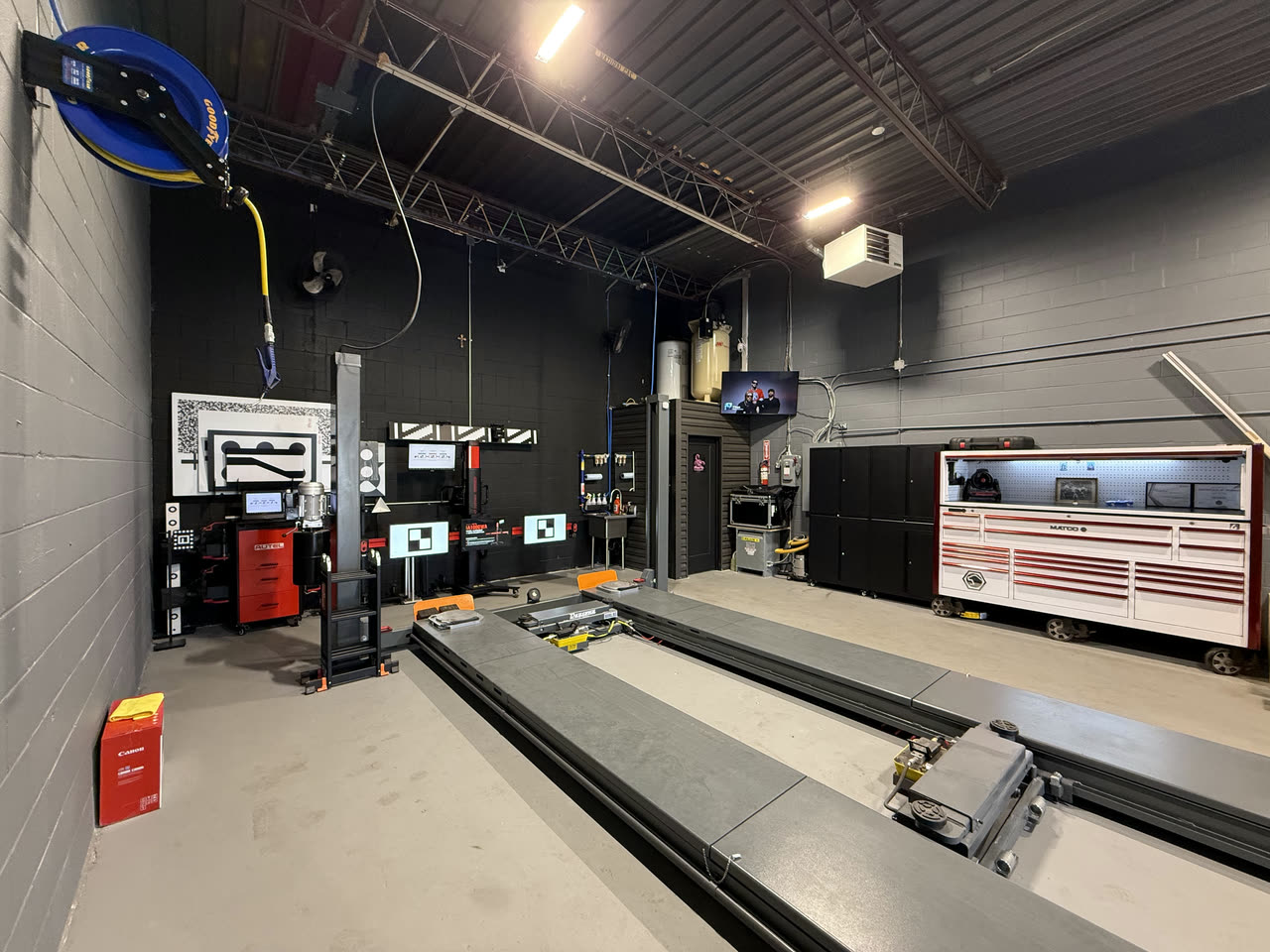
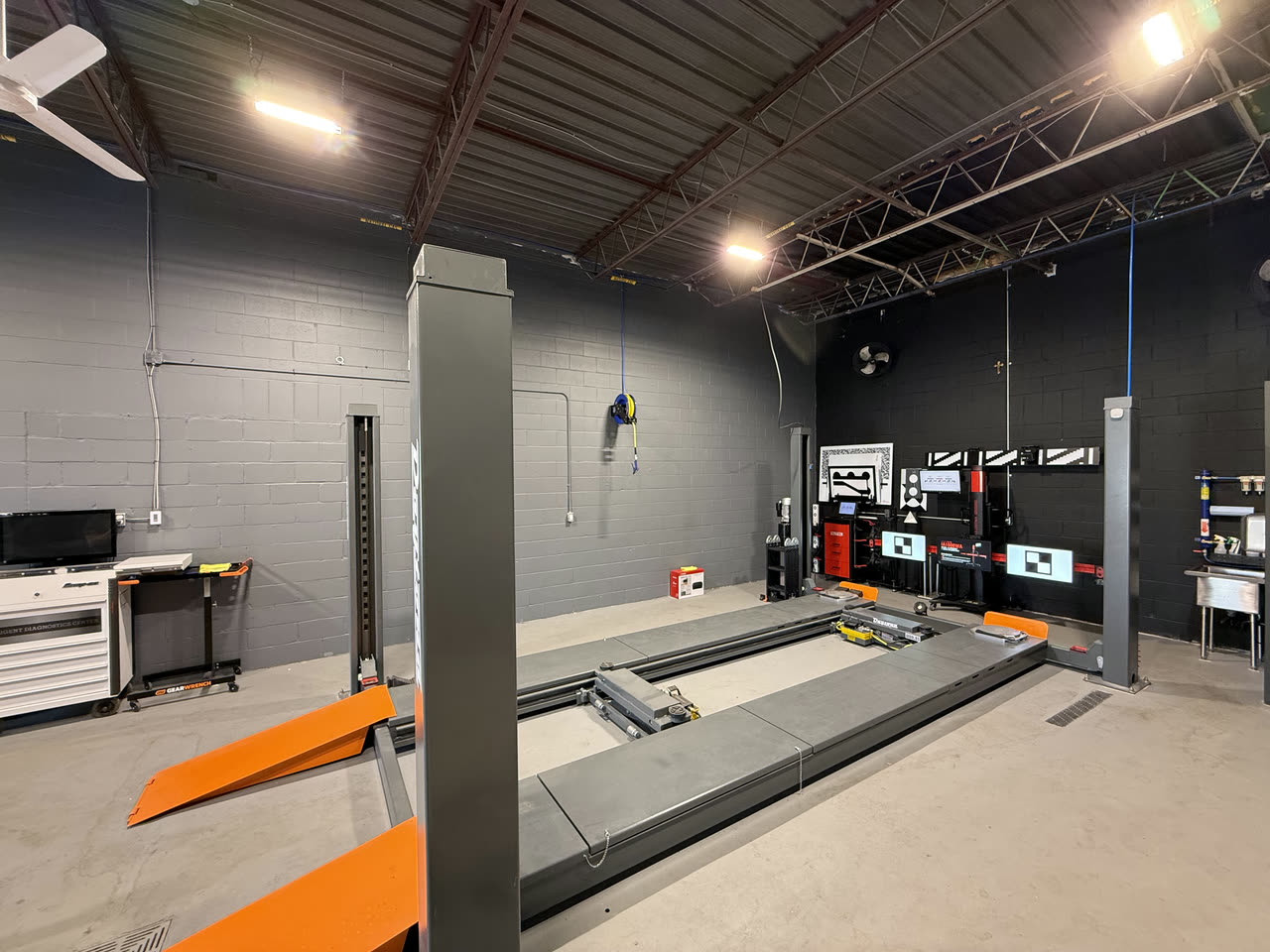
The calibration station is in the same bay as the four post alignment lift. It is a camera based system with a crossbar of cameras and stands that hold the target boards, including checkerboard and pattern targets, in front of the lift. The car sits on the same level lift for both jobs, so it does not have to be moved between the alignment and the calibration.
That matters because the camera on the windshield expects the car to be going straight where the rear wheels point. If the alignment is out, the calibration is done against the wrong line. Having both in one bay means the alignment can be checked first, then the calibration done against a car that is set up correctly. More on alignment is on the wheel alignment page.
ADAS calibration starts at $200, labour before tax. Details on which systems we calibrate and what to bring are on the ADAS calibration page.
What goes wrong if calibration is skipped
Sometimes a warning light tells you right away. The car knows the camera has been disturbed and shuts off lane keeping until it is calibrated. That is the easy case.
The harder case is when nothing lights up. The camera is working, just aimed slightly wrong. Then you get things like:
- Lane keeping that nudges the car toward one line instead of centring it, or fights you on curves.
- Lane departure warnings that go off when you are in the middle of the lane, or not at all when you drift.
- Automatic emergency braking that reacts late, or brakes hard for a car parked at the side of the road.
- Adaptive cruise that misjudges the gap to the car ahead.
A driver assist system that is aimed wrong is worse than one that is switched off, because you still trust it. If anything about these systems has felt different since your glass was replaced, have it checked.
Questions to ask when you book the windshield
Ask the glass shop whether they calibrate the camera themselves, send it out, or leave it to you. Ask whether the vehicle maker calls for static, dynamic or both. Ask for a calibration report afterward, which shows the camera passed.
If you are arranging the calibration yourself, book it for after the glass is installed and the adhesive has cured according to the glass shop’s instructions. Describe any warnings on the dash, and attach a photo. If a warning light stays on even after calibration, the problem may be wiring or a module, and that becomes an electrical diagnosis.
Questions people ask
Do I need ADAS calibration after a windshield replacement?
If your car has a forward camera mounted on the windshield, usually behind the rear view mirror, the vehicle maker almost always calls for calibration after the glass is replaced. The camera is now looking through different glass from a bracket that may sit slightly differently. Calibration aims it back to where the car expects it to be looking.
What is the difference between static and dynamic ADAS calibration?
Static calibration is done in the shop, with the car on a level floor and target boards set at exact distances in front of it. Dynamic calibration is done by driving the car on well marked roads at set speeds while a scan tool tells the camera to learn. Some cars need one, some the other, and some need both.
How much does ADAS calibration cost in Ottawa?
At Scorpion Auto Tech on Blackwell Street, ADAS calibration starts at $200, labour before tax. The final price depends on the car and whether it needs static calibration, dynamic calibration or both.
Related work
Book it tonight
Pick a time on the booking page whenever it suits you, describe what the car is doing and add a few photos. Drop it off on the day you picked, before 4pm.