What the noise usually means
Brakes describe their own problems fairly well if you know what to listen for. A high squeal that comes and goes as you drive, then stops when you press the pedal, is often the wear indicator, a small steel tab on the pad that touches the rotor when the lining gets thin. It is a warning, not an emergency.
A low grinding or scraping when you brake is different. That is usually the lining gone and the backing plate on the rotor. A pulse in the pedal or a shake in the steering wheel when slowing from highway speed points at the rotors. A pedal that feels soft, sinks slowly at a light, or needs pumping is a hydraulic problem, a leak or air in the system, and a sinking pedal means the car should not be driven until it is checked. A car that pulls to one side under braking usually has a caliper that is sticking or a hose collapsing inside.
Salt, seized slides and caliper brackets
Road salt is hard on every brake part, and the hardware suffers most. The caliper rides on two slide pins inside rubber boots. Once a boot tears, salty water gets in, the grease washes out and the pin seizes. The caliper then clamps the inner pad harder than the outer one. That is why so many Ottawa cars come in with an inner pad worn to the metal and an outer pad that looks half new.
The pads also sit in a bracket, and rust builds up underneath the stainless clips until the pads cannot slide back. A proper brake job here means pulling the brackets, cleaning the abutments down to clean metal, fitting new clips where the old ones are rusted, and greasing the slide pins with a lubricant made for brakes. Skip that step and new pads wear unevenly within one winter.
Rear brakes need the same attention, and many newer cars have an electronic parking brake built into the rear caliper. Those need a scan tool to retract the piston before the pads can come out.
Measuring before replacing
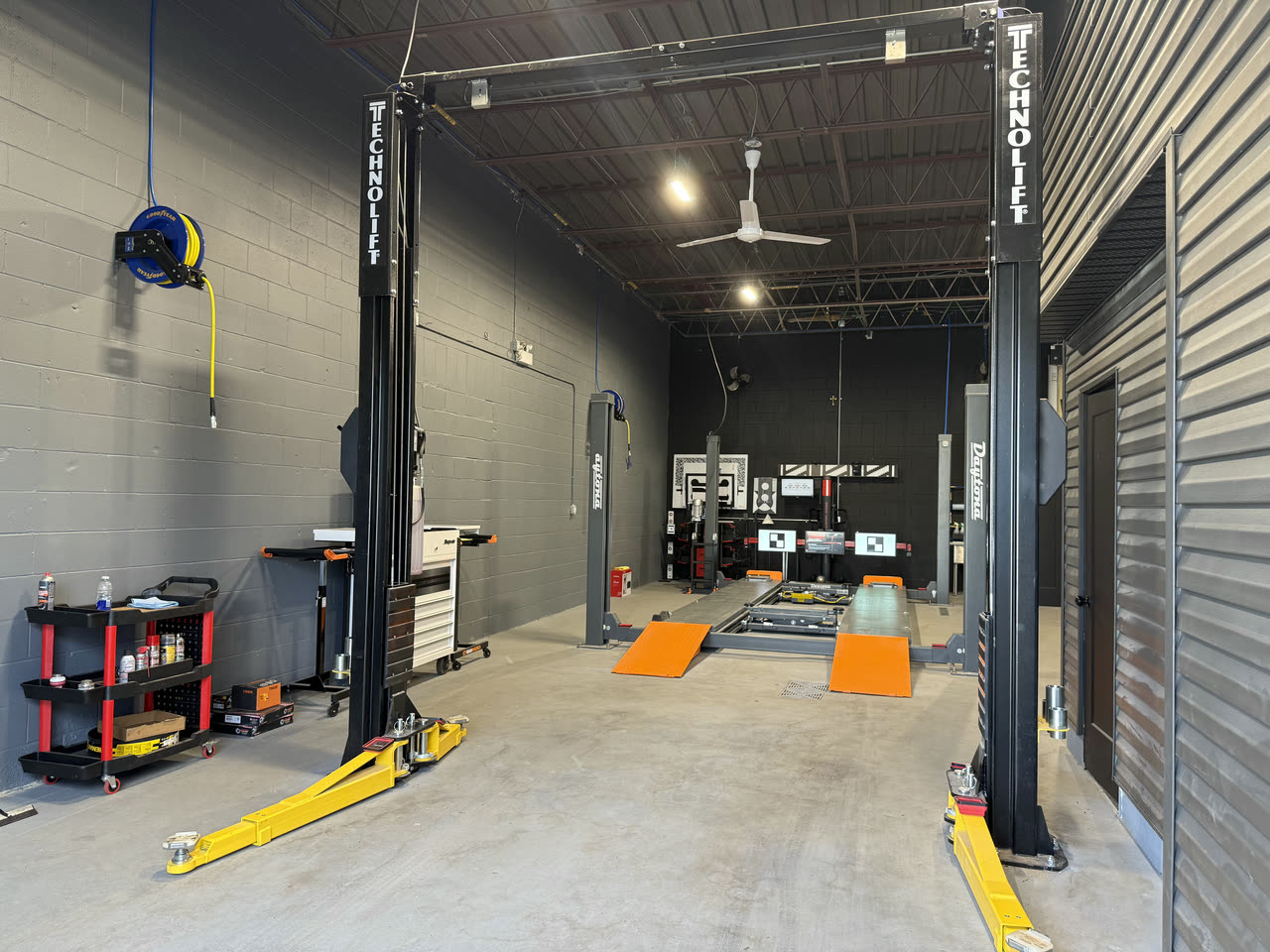
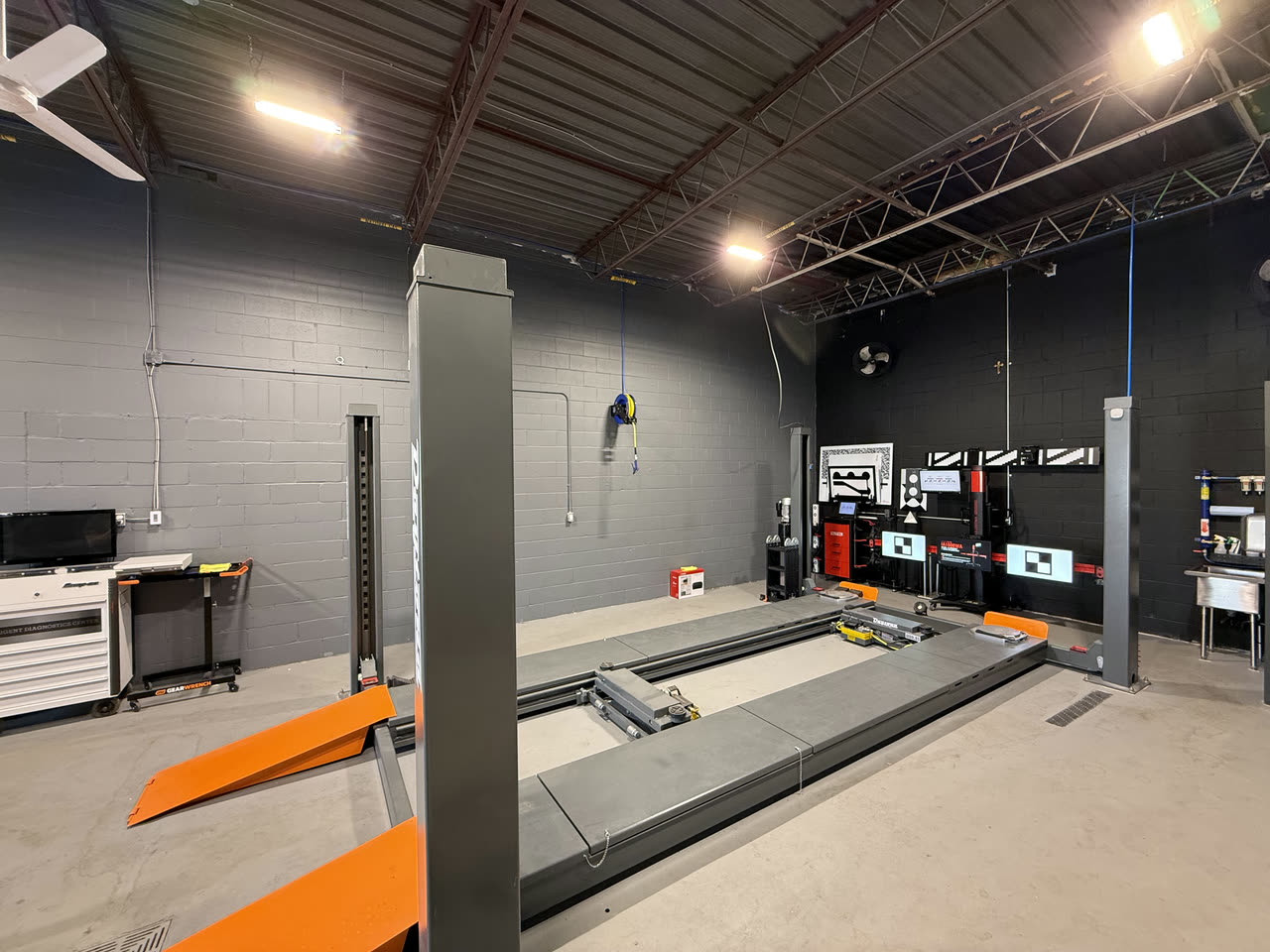
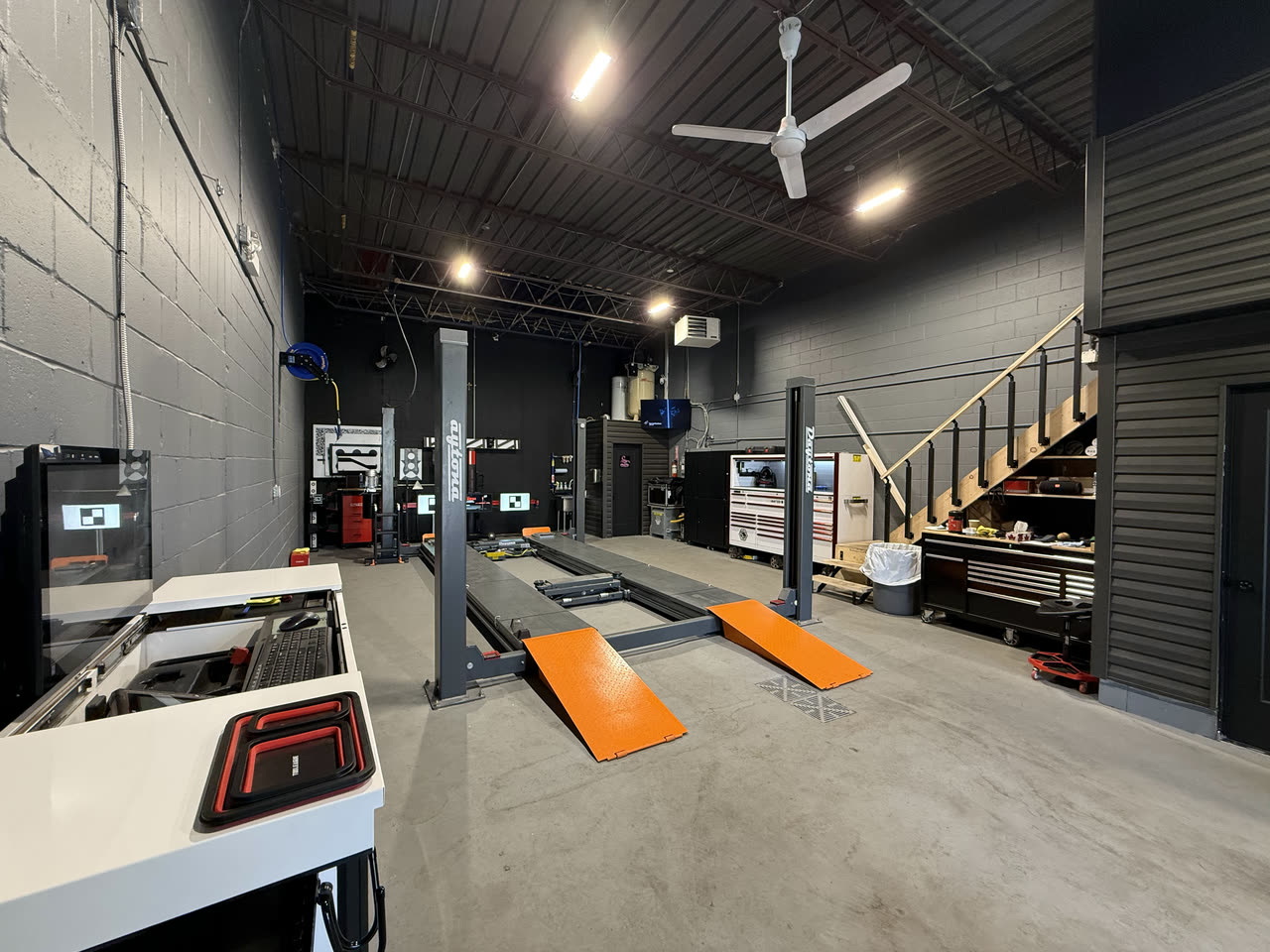
A brake inspection is done on one of the two post lifts with the wheels off. New pads are usually around 10 to 12 mm of lining. We measure what is left on each pad, inner and outer, since uneven wear tells us about the slides. Rotors are measured for thickness against the minimum stamped on the rotor, and checked for runout, the side to side wobble that causes a pulsing pedal. Runout often comes from rust left between the rotor and the hub when it was last installed, so the hub face gets cleaned before a new rotor goes on.
Brake inspection time is $120 an hour, before tax, parts extra. You get a call with the measurements, what needs doing now and what can wait, and the price for parts and labour. Nothing gets replaced until you say so.
Rusted brake lines are an Ottawa problem
Most cars on the road in Ottawa, ON still use steel brake lines that run the length of the underbody, clipped to the frame and routed above the fuel tank. After enough winters they rust from the outside in, usually worst where they sit in the clips and hold moisture. A line that lets go does not give much warning. The pedal drops toward the floor, and on many cars you lose half your braking.
We look at the lines every time a car is up, and we will show you if one is scaling badly. Replacement lines are usually made from copper nickel tubing, which does not rust the way bare steel does, bent to follow the original route and flared at each end. Rubber brake hoses at each wheel are checked too, for cracks and for bulging under pressure.
Brake fluid gets tired too
Brake fluid pulls moisture out of the air through the hoses and seals. Water lowers the boiling point, so the pedal can go soft after hard braking, and it corrodes the inside of the calipers and the ABS unit, which is an expensive part to replace. Dark fluid is a hint, but colour is not a reliable test. We check it before recommending a flush, and on cars where the ABS unit has to be cycled during bleeding, the scan tool runs that procedure.
Brakes, tires and suspension together
Brakes rarely wear in isolation. A pad worn on one edge can come from a seized slide, but it can also come from a worn wheel bearing or a loose ball joint letting the rotor move. If we see that, we check the suspension and steering parts on that corner before blaming the brakes alone. If your seasonal tire swap is due, doing the tire change on the same visit means the wheels only come off once, and the brakes get a look while they are off.
Brakes are also one of the main items on an Ontario safety, the certificate now issued through DriveON, so a car being sold or plated often needs pads, rotors or lines to pass. To get yours looked at, book a brake inspection online, describe the noise or feel and when it happens, cold or warm, gentle or hard braking, and attach a short video if you can catch the sound.
Questions
How much does brake pad replacement cost in Ottawa?
It depends on the vehicle and whether the rotors, hardware or calipers need replacing at the same time. At Scorpion Auto Tech a brake inspection is billed at $120 an hour before tax, and parts are quoted for your exact car once the pads and rotors are measured. You get the price before any work starts.
Why are my brakes grinding?
Grinding usually means the pad lining is worn through and the steel backing plate is cutting into the rotor. It can also be a stone caught behind the dust shield or a heavily rusted rotor edge. Metal on metal ruins rotors quickly and lengthens stopping distance, so have it checked soon.
Do I need new rotors every time I replace brake pads?
Not always. Rotors are replaced when they are under the minimum thickness stamped on them, have too much runout, are cracked, or are rusted and pitted across the braking surface. On Ottawa cars, salt corrosion on the rotor face is the most common reason the rotors go with the pads.
Why does my brake pedal pulse when I stop?
A pulsing pedal usually comes from uneven rotor thickness, often caused by runout from rust built up between the rotor and the hub. Seized caliper slides make it worse. Measuring the rotors shows whether they can stay or need replacing.
How often should brake fluid be changed?
Brake fluid absorbs moisture over time, which lowers its boiling point and corrodes parts inside the calipers and ABS unit. Many manufacturers call for a change every two to three years regardless of kilometres. Your owner's manual lists the interval for your car.