What ADAS calibration is
ADAS stands for advanced driver assistance systems. That covers lane departure warning, lane keeping assist, automatic emergency braking, adaptive cruise control, traffic sign recognition and automatic high beams. Most of these rely on a forward camera mounted behind the windshield near the mirror, a radar sensor behind the front bumper or grille, or both working together.
Those sensors need to know precisely where they are pointing relative to the car. A camera aimed a fraction of a degree off can misjudge a lane line or a vehicle well down the road. Calibration is the process of teaching each sensor where straight ahead is, following the vehicle manufacturer’s own procedure for that model.
When calibration is needed
- After a windshield replacement on any car with a camera behind the glass. The new glass and camera bracket never sit exactly where the originals did, which makes this the most common reason a camera needs calibrating.
- After a wheel alignment, when the manufacturer calls for it, because the thrust line the camera uses as its reference may have moved
- After bumper, grille or front end collision repair, or any time the radar bracket was bent, removed or replaced
- After a change in ride height, such as new springs, a lift kit, a lowering kit or a levelling kit
- When a driver assist fault light or a camera unavailable message appears and does not clear on its own
Static calibration in the shop
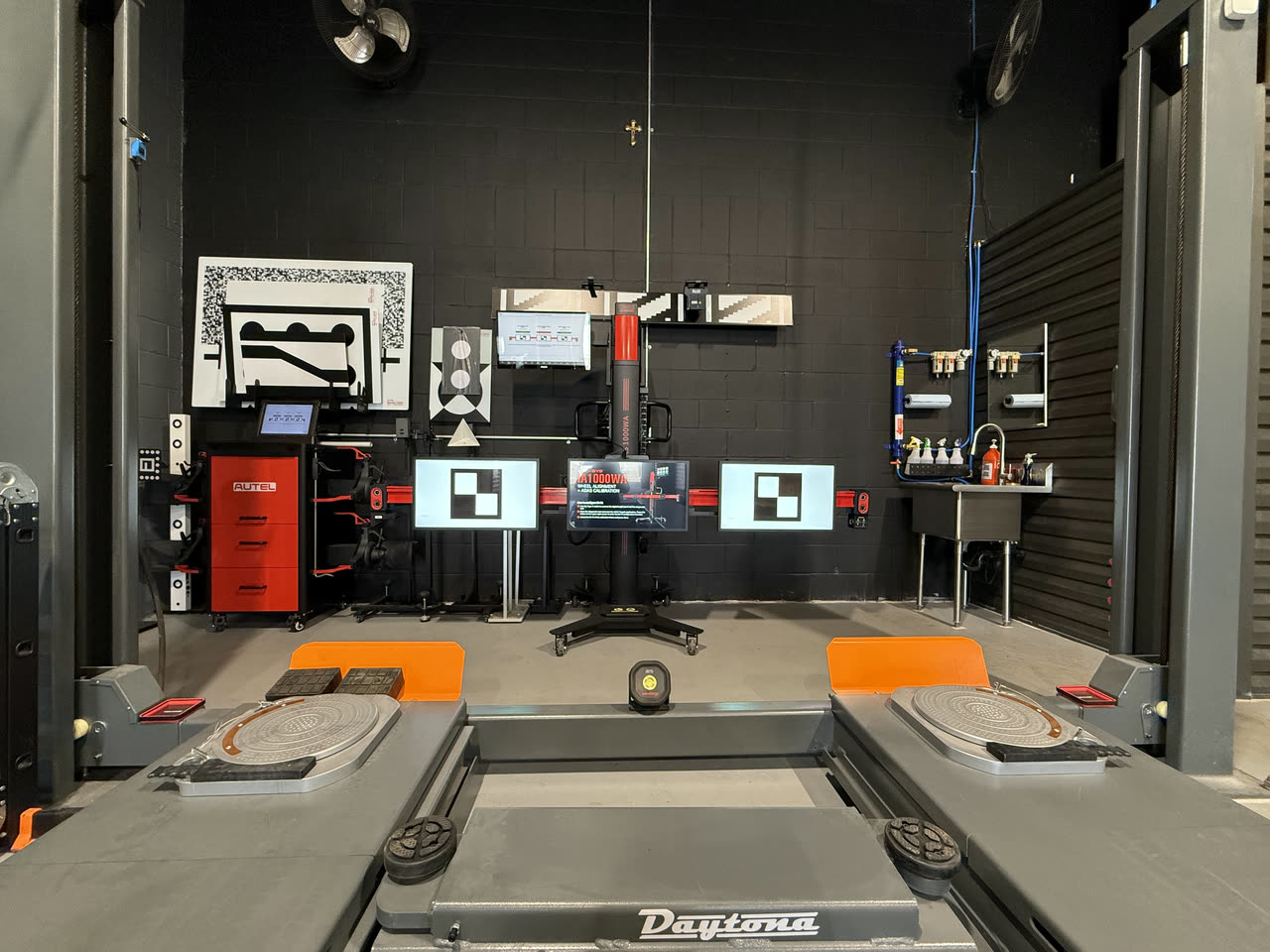
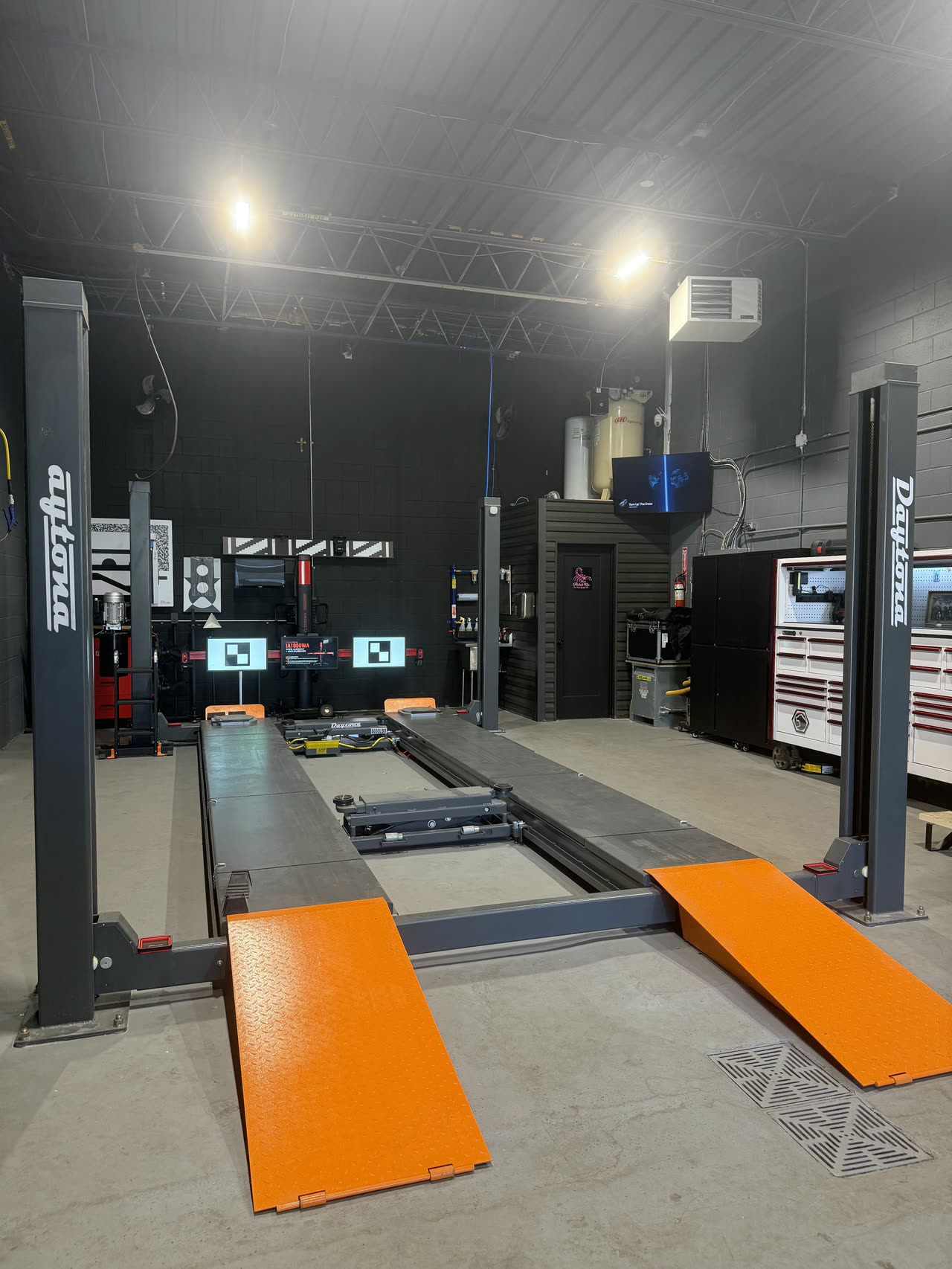
A static calibration is done with the car parked. Target boards printed with checkerboard or pattern designs are set on a stand in front of the vehicle, at the distance and height the manufacturer specifies, squared to the car’s thrust line. A scan tool puts the camera into calibration mode, the camera reads the target, and it works out its own aim from what it sees. Radar sensors are handled the same way, using a reflector or a target the radar can detect.
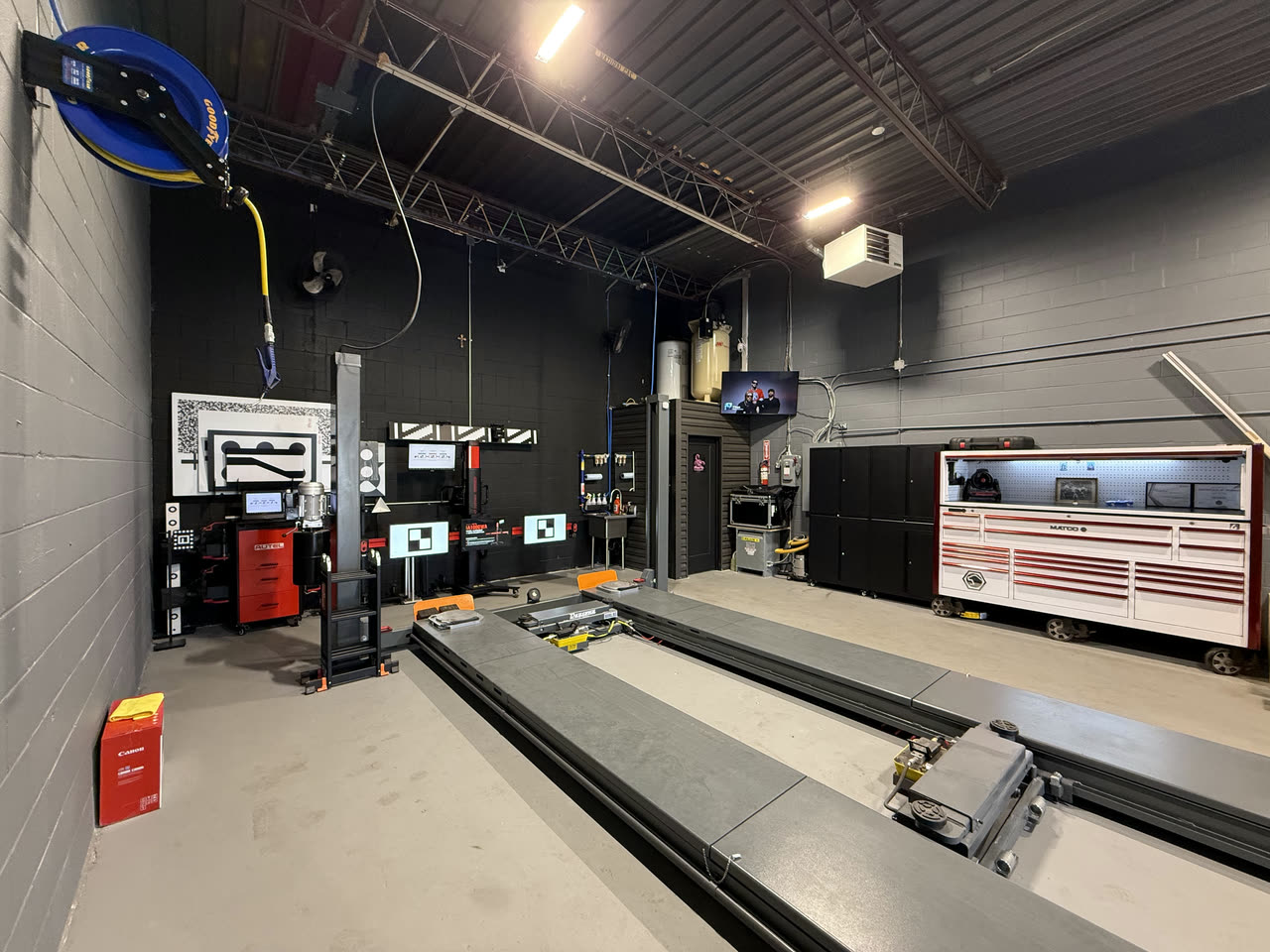
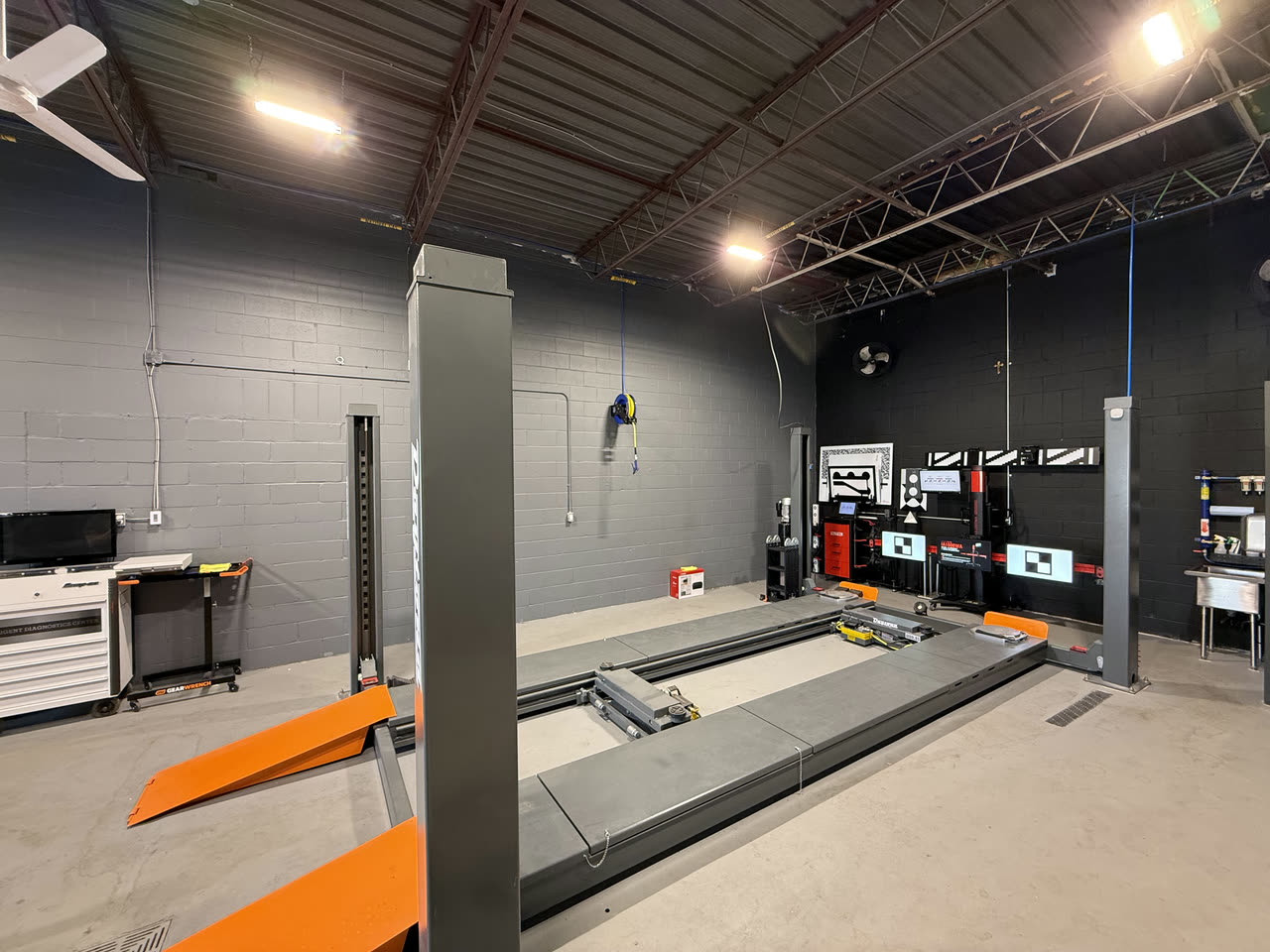
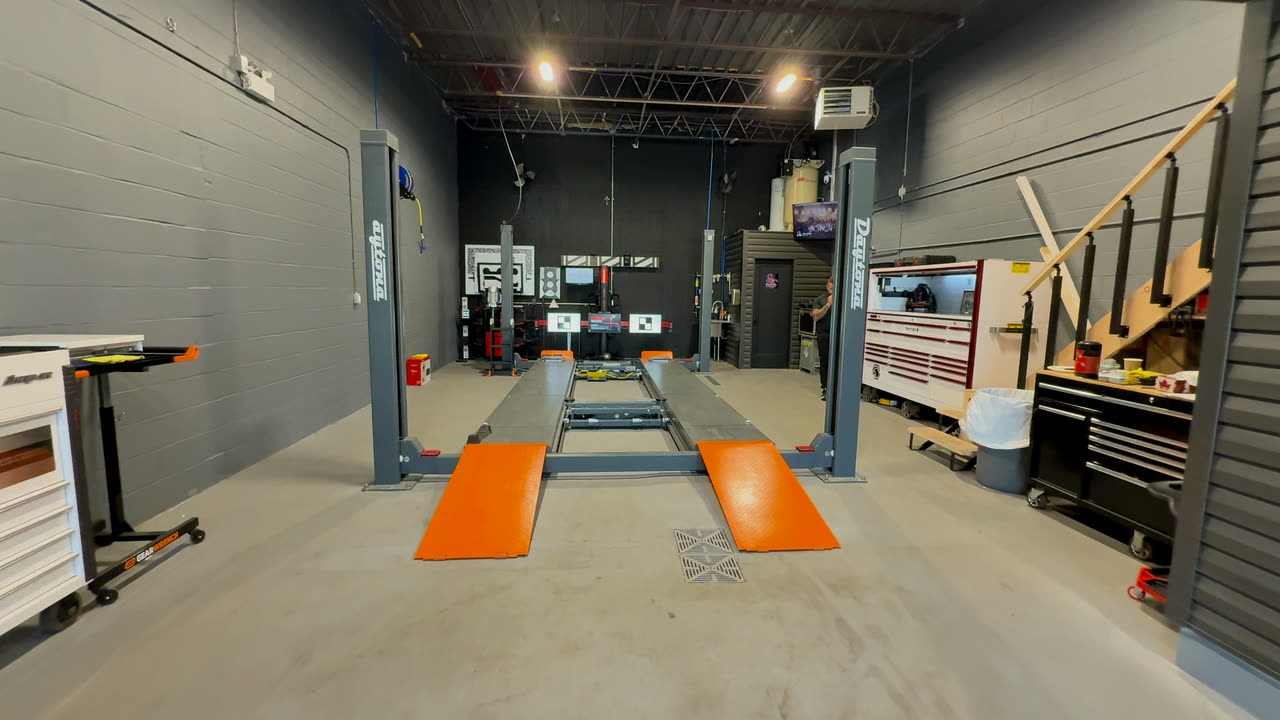
Our calibration station sits in front of the four post alignment lift. It is a red cabinet with monitors, a crossbar carrying cameras, and the target boards on their stand. Having the alignment equipment and the calibration targets on the same lift and the same floor is what makes the setup repeatable from one car to the next.
Dynamic calibration on the road
A dynamic calibration is done by driving. The scan tool puts the system into its learning mode, and the car is driven within a set speed range on roads with clear lane markings until the camera has seen enough to calibrate itself. Some vehicles need only a static calibration, some need only a dynamic one, and some need both, one after the other.
Dynamic calibrations have an Ottawa catch. When lane lines are buried under snow, slush or a film of road salt, the camera may not be able to finish learning, and the drive has to wait for cleaner roads. Where a manufacturer allows a static calibration instead, doing it in the bay avoids that wait.
Why a level floor and the exact distance matter
A calibration is only as good as its setup. If the floor slopes, the car sits tilted and the camera learns a tilted world. If the target is a few centimetres off its specified distance or height, or turned slightly away from the thrust line, the camera calibrates to the wrong reference and reports success anyway.
So the preparation comes first. Tires at the correct pressure, fuel at the level the procedure calls for, the trunk empty, nothing heavy in the back seat, and the car sitting level. A calibration marked complete by the scan tool is not proof it was done correctly if the setup was wrong. A road test afterward confirms the systems behave the way they should.
Alignment first, then calibration
The forward camera takes the direction the rear wheels push the car, the thrust angle, as its idea of straight ahead. If the alignment is off, the camera ends up calibrated to a crooked reference. That is why many procedures call for a wheel alignment check before calibration begins, and why an alignment so often leads to one. With both jobs in one bay at our shop in Ottawa, ON, the car does not have to move between them.
What it costs and how to book
ADAS calibration starts at $200 before tax, and any parts such as brackets are extra. The final price depends on how many sensors the car has and whether it needs static calibration, dynamic calibration or both. When you book the calibration, say what work was done on the car, whether that was a windshield, an alignment or a bumper, and add the VIN by typing it in or scanning it with your phone camera, since the procedure depends on the exact trim and options.
Used car dealers can book calibrations through the same page, and our dealer and fleet service page covers reconditioning work. If a driver assist warning is on and you are not sure why, a diagnostic scan is the place to start.
Questions
Do I need ADAS calibration after windshield replacement?
If your car has a camera mounted behind the windshield for lane departure warning, lane keeping or automatic emergency braking, the manufacturer almost always requires it to be calibrated after the glass is replaced. The new glass and bracket never sit exactly where the old ones did, and a small error in camera aim grows with distance.
How much does ADAS calibration cost in Ottawa?
At Scorpion Auto Tech on Blackwell Street in Ottawa, ADAS calibration starts at $200 before tax. The final price depends on how many cameras and radar sensors the vehicle has and whether the manufacturer calls for a static calibration, a dynamic one or both.
What is the difference between static and dynamic ADAS calibration?
A static calibration is done in the shop with the car parked in front of target boards set at a precise distance and height. A dynamic calibration is done by driving the car on well marked roads at set speeds while the camera learns. The vehicle manufacturer decides which method, or which combination, a car needs.
Do I need ADAS calibration after a wheel alignment?
Often, yes. The forward camera uses the direction the rear wheels push the car as its reference for straight ahead, so changing the alignment can leave the camera aimed slightly wrong. Many manufacturers require at least a steering angle reset, and some require a full camera calibration.
What happens if the lane departure camera is not calibrated?
The system may show a fault and switch itself off, which is the better outcome. The worse one is a camera that works but is aimed slightly off, so lane keeping steers toward the edge of the lane or emergency braking reacts late or to the wrong object.